
Root Wart vs. Wart Root: What’s the Difference and Why It Matters for Treatment
When it comes to warts, confusion runs deeper than the skin itself. You’ve probably heard people talk about “root warts” or mention needing to “get the root” of a wart. These terms get thrown around so casually that many assume they’re medically accurate. The reality? They’re not.
This widespread misconception isn’t just a matter of semantics—it directly impacts how people approach treatment. Some spend months digging at their skin with home remedies, believing they need to extract some mysterious “root.” Others give up on treatment entirely, thinking their warts are too deeply rooted to remove.
Understanding the real science behind warts can transform your approach to treatment. When you know what you’re actually dealing with, you can choose methods that work rather than wasting time on folklore remedies. More importantly, you can avoid potentially harmful practices that stem from misunderstanding what warts really are and how they develop.
Let’s clear up this confusion once and for all and explore why accurate information is your best tool for effective wart treatment.
What Are Warts? A Quick Overview
Before we tackle the myths, let’s cover the basics. Warts are small, noncancerous skin growths caused by the human papillomavirus (HPV). This virus is very common, and there are over 100 different types of HPV. Some types cause warts on the hands, others on the face, and some specialize in the feet.
The virus enters your body through tiny cuts or breaks in the skin. Once inside, it causes the top layer of skin to grow rapidly, forming the visible growth we call a wart. Warts can spread from one part of your body to another or from person to person through direct contact or by touching a surface contaminated with the virus, like a shower floor or a locker room bench.
While warts can appear anywhere, certain types are more common on the feet. These are known as plantar warts. The pressure from walking and standing can cause plantar warts to grow inward beneath a thick, tough layer of skin. This is what often makes them so painful, feeling like you have a pebble in your shoe.

Plantar Wart Treatment
Common types of warts include:
- Common Warts: Usually appear on the hands and fingers. They are rough, grainy, and have a rounded top.
- Plantar Warts: Grow on the soles of the feet. They can grow in clusters and are often flat or grow inward due to pressure.
- Flat Warts: Often appear on the face, thighs, or arms. They are smaller and smoother than other warts and tend to grow in large numbers.
- Filiform Warts: Look like long threads or thin fingers and often grow on the face, around the mouth, eyes, or nose.
- Periungual Warts: Grow under and around the toenails and fingernails.
Understanding that warts are a viral infection is the first key to effective treatment. The goal isn’t just to remove the visible lump; it’s to eliminate the virus causing it.
Debunking the Myth: Do Warts Have Roots?
Here’s the truth that might surprise you: warts do not have roots. This persistent myth has led to countless ineffective treatments and unnecessary pain.
What people mistake for “roots” are actually blood vessels that feed the wart tissue. As warts grow, they develop their own blood supply through tiny capillaries. When you look closely at a wart, those small black dots you see aren’t roots—they’re the ends of these blood vessels that have been thrombosed (clotted).
The confusion often stems from plantar warts, which grow inward due to pressure. This inward growth creates the illusion of something with deep roots, but the virus actually remains in the epidermis—the outermost layer of skin. The “depth” people perceive is simply the wart being pushed down by body weight and the thick skin of the foot sole.
This root myth has dangerous consequences. People attempt to “dig out” warts with razors, needles, or aggressive acid treatments, thinking they need to reach some deep root structure. These attempts often result in scarring, infection, or spreading the virus to surrounding tissue.
What Is a “Root Wart”?
The term “root wart” gets used in casual conversation, but it has no medical meaning. People typically use this phrase to describe plantar warts that seem particularly stubborn or deep-set.
In everyday language, someone might say, “I have a root wart on my foot that just won’t go away.” What they’re really describing is likely a plantar wart that has been present for a long time, developed a thick callus around it, or resisted previous treatment attempts.
This terminology becomes problematic when it influences treatment decisions. The assumption that some warts have “roots” while others don’t can lead people to believe they need more aggressive treatments for certain types of warts, when the reality is that all warts are fundamentally the same—viral infections in the skin.
What Is a “Wart Root”?
When people refer to a “wart root,” they’re usually talking about the perceived source or foundation of the wart that needs to be eliminated for permanent removal. While this concept isn’t anatomically accurate, it does touch on an important treatment principle.
The closest thing to a “wart root” is the viral DNA that has infected the skin cells in the area. This genetic material instructs the cells to reproduce abnormally, creating the wart. The virus typically affects the basal layer of the epidermis, which is the deepest part of the skin’s outer layer.
Understanding this viral foundation is crucial for treatment success. Effective wart removal must eliminate or neutralize the virus-infected cells, not just remove the visible bump. This is why surface treatments like filing or cutting often fail—they don’t address the underlying viral infection.
The virus can also remain dormant in surrounding tissue, which explains why warts sometimes recur in the same location. This dormant virus isn’t a “root” in the botanical sense, but rather infected cells that weren’t fully eliminated during treatment.
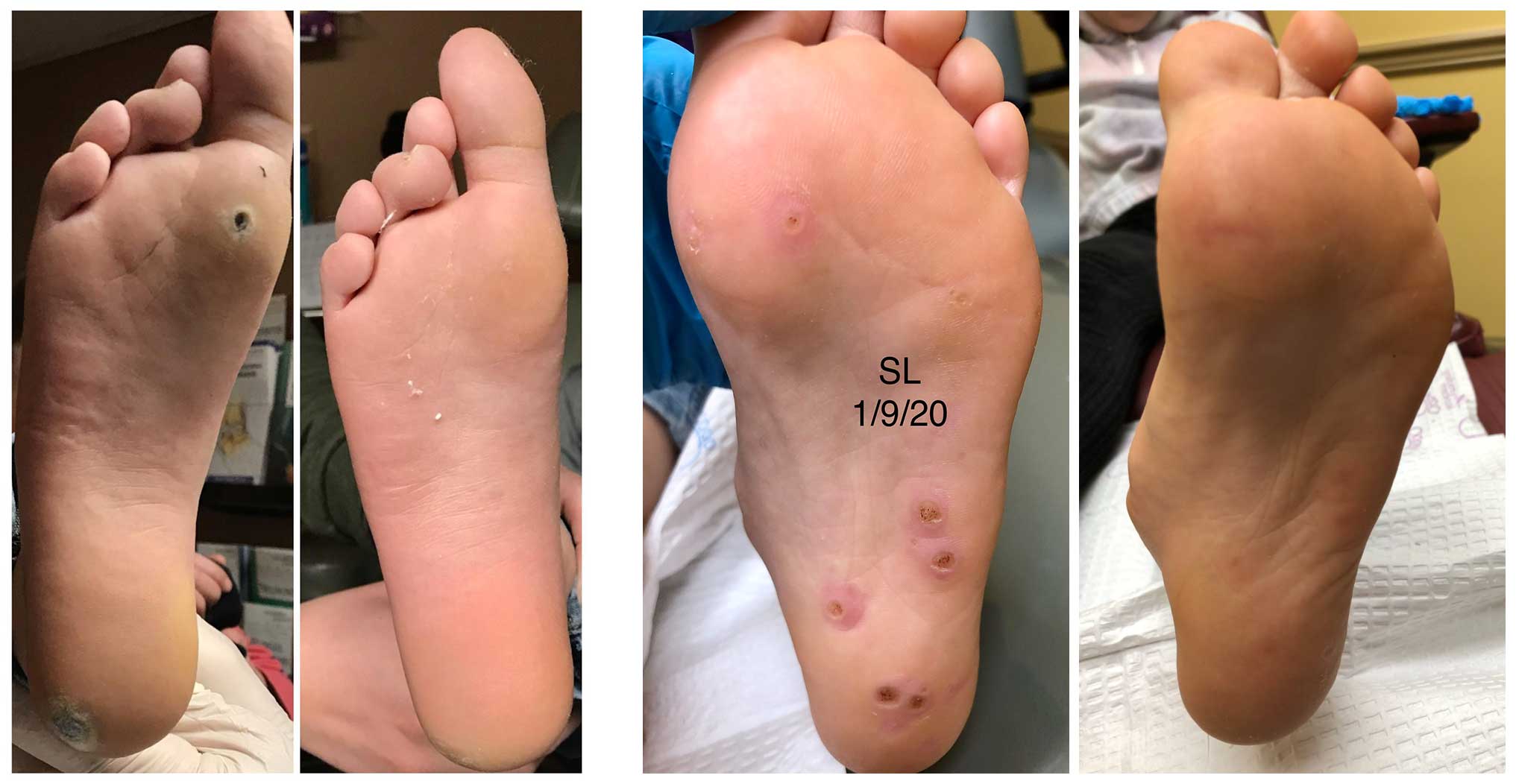
Plantar Wart Treatment Service
Why the Difference Matters for Treatment
These terminology mix-ups aren’t just academic—they directly impact treatment outcomes. When people believe warts have roots that need extraction, they often pursue harmful approaches.
Common misconceptions lead to problematic treatments like:
- Excessive digging or cutting at the wart
- Using caustic substances inappropriately
- Giving up too early when “surface” treatments don’t work immediately
- Avoiding professional treatment because they assume it won’t reach the “roots”
Effective wart treatment focuses on eliminating the virus, not extracting imaginary roots. This means treatments that destroy infected tissue, stimulate immune response, or directly target viral activity tend to be most successful.
Professional treatments understand this viral nature. Cryotherapy freezes the infected tissue to destroy virus-containing cells. Laser therapy precisely targets the wart tissue. Prescription medications either destroy infected cells or enhance immune response against the virus.
Understanding that you’re fighting a virus, not pulling out roots, also explains why treatment often requires multiple sessions. The goal is to eliminate all virus-infected cells, which may extend beyond the visible wart boundaries.
Treatment Options for Stubborn Warts
Successful wart treatment requires a systematic approach that addresses the viral infection, not just the visible growth.
Over-the-Counter Remedies can be effective for newer, smaller warts. Salicylic acid preparations work by gradually removing layers of infected skin, allowing the immune system to better recognize and fight the virus. These treatments require patience and consistent application over weeks or months.
Cryotherapy (Freezing) remains one of the most effective professional treatments. Liquid nitrogen destroys the infected tissue by freezing it, typically requiring multiple sessions spaced several weeks apart. The controlled destruction allows healthy tissue to regrow without the viral infection.
Laser Treatments offer precision targeting of wart tissue. Pulsed dye lasers destroy the blood vessels feeding the wart, while CO2 lasers can vaporize the infected tissue. These treatments often provide faster results than traditional methods.
Prescription Medications include stronger acids, immune system modulators like imiquimod, and antiviral agents. These medications can be particularly effective for resistant cases or when multiple warts are present.
At Flagstaff Foot Doctors, treatment plans are customized based on wart size, location, duration, and patient factors. The combination of advanced technology and personalized care ensures the most effective approach for each individual case.
Preventing Warts from Coming Back
Prevention is always better than plantar wart treatment, and understanding how warts actually spread helps you protect yourself:
Maintain Good Foot Hygiene
Keeping your feet clean and dry is essential in preventing the spread of warts. Make sure to wash your feet daily, paying extra attention to the areas between your toes. After washing, thoroughly dry your feet to reduce moisture, which can encourage viral growth.
Avoid Direct Contact
Avoiding direct contact with warts is crucial to minimizing their spread. Refrain from touching warts, whether they are on your own body or someone else’s, with bare skin. If contact occurs, wash your hands immediately to prevent the virus from spreading to other areas.
Protect Your Feet
Public showers, pools, and locker rooms are common breeding grounds for the human papillomavirus (HPV). Always wear shoes, sandals, or flip-flops in these shared spaces. By protecting your feet from direct contact with infected surfaces, you significantly lower your risk of contracting warts.
Strengthen Your Immune System
A strong immune system can help your body resist infections, including HPV. Support your immune health through a balanced diet rich in vitamins and minerals, prioritize adequate sleep, and manage stress effectively. These habits boost your body’s ability to defend against viruses and maintain overall wellness.
Don’t Share Personal Items
Sharing personal items like socks, shoes, towels, or foot care tools can easily transmit wart-causing viruses. To protect yourself and others, always use your own belongings and avoid swapping footwear or grooming supplies, especially in communal or family settings.
At Flagstaff Foot Doctors, we also provide ongoing monitoring to catch any new warts early when they’re easiest to treat.

Plantar Wart Treatment Service Provider
Why Choose Flagstaff Foot Doctors for Wart Treatment?
Our team specializes in foot and ankle conditions, giving us extensive experience with plantar warts and their unique challenges. We understand that foot warts aren’t just cosmetic issues—they can significantly impact your mobility, comfort, and quality of life.
What sets us apart:
Accurate Diagnosis
We properly identify warts and distinguish them from other skin conditions, such as calluses or corns. Our expertise ensures you receive the correct diagnosis, laying the groundwork for effective and targeted treatment.
Evidence-Based Treatments
Our treatment methods are grounded in current medical research, ensuring proven effectiveness. We combine scientific approaches with clinical experience to provide solutions that work, helping you achieve relief and recovery efficiently.
Personalized Care
We tailor treatment plans to your specific needs, taking into account your lifestyle, preferences, and any previous treatments. This personalized approach ensures optimal outcomes while addressing your unique circumstances.
Patient Education
We prioritize ensuring you understand your condition and the steps to prevent recurrence. Our team takes the time to educate you about wart care and maintenance, empowering you to take control of your health.
Follow-Up Care
Monitoring your progress is a vital part of our approach. We provide consistent follow-up care to track improvements and adjust treatments as necessary, ensuring optimal long-term results and patient satisfaction.
Take the Next Step Toward Wart-Free Feet
The confusion between “root warts” and “wart roots” highlights a larger truth: accurate information is essential for effective treatment. Warts don’t have roots, but they do have viral foundations that require proper medical attention.
Don’t let misconceptions keep you from getting the treatment you need. Whether you’re dealing with a single stubborn plantar wart or multiple lesions, professional care offers the best chance for complete resolution.
Stop wasting time on folklore remedies based on outdated myths. Schedule a consultation with Flagstaff Foot Doctors today and discover how proper diagnosis and treatment can finally eliminate your warts for good. Your feet—and your peace of mind—deserve expert care.
Flagstaff Foot Doctors: Anthony Rosales DPM
https://www.google.com/maps?cid=8835841318590452161
421 N Humphreys St, Flagstaff, AZ 86001, United States
(928) 774-4825
https://flagstafffootandankle.com/